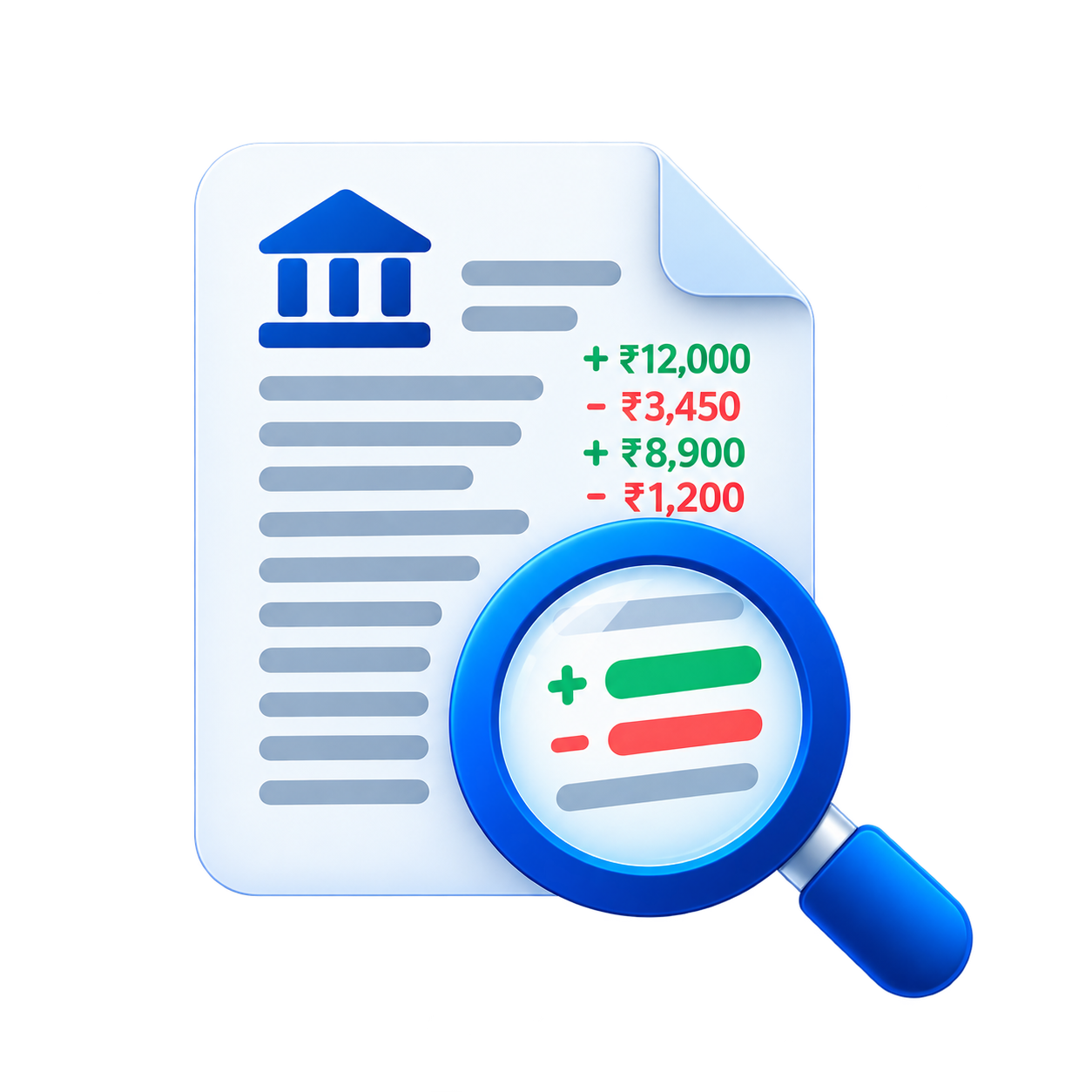
US mortgage underwriters ask for two to three months of bank statements to confirm what the application claims. They compare payroll credits against stated income, check that cash reserves cover closing costs plus several months of payments, and flag large or irregular deposits that need a paper trail. A bank statement analyser runs that same review in seconds: recurring credits grouped by payer, monthly income estimate with a stability score, and every large deposit surfaced with its date and counterparty.
Large deposits get the most scrutiny because borrowed down payments change the risk picture. Underwriters typically question any single deposit above half a month's income that is not payroll. An analyser lists deposits ranked by size with running balances around each one, so a borrower can attach gift letters or transfer records to exactly the lines the lender will ask about instead of re-explaining the whole statement.
Cash-flow patterns matter as much as totals. Mortgage reviewers look for steady or growing balances, rent payments leaving on time, and no unexplained overdrafts in the months before application. The free Bank Statement Analyser reports average, minimum, and maximum monthly balances plus overdraft and bounce flags, which lets applicants spot a problem month and wait one more cycle before applying.
Self-employed borrowers face the strictest reads because tax returns understate take-home pay. Twelve to twenty-four months of statements with business-like credits separated from personal spending tell the real affordability story. Running those files through the analyser before the lender does turns a stressful document request into a prepared file with income, obligations, and verification signals already summarized.
To preview the review, upload two recent statements to the free live demo of the Bank Statement Analyser, or convert them to clean Excel first with the free Bank Statement Converter and hand your loan officer a spreadsheet that matches the PDFs line for line.