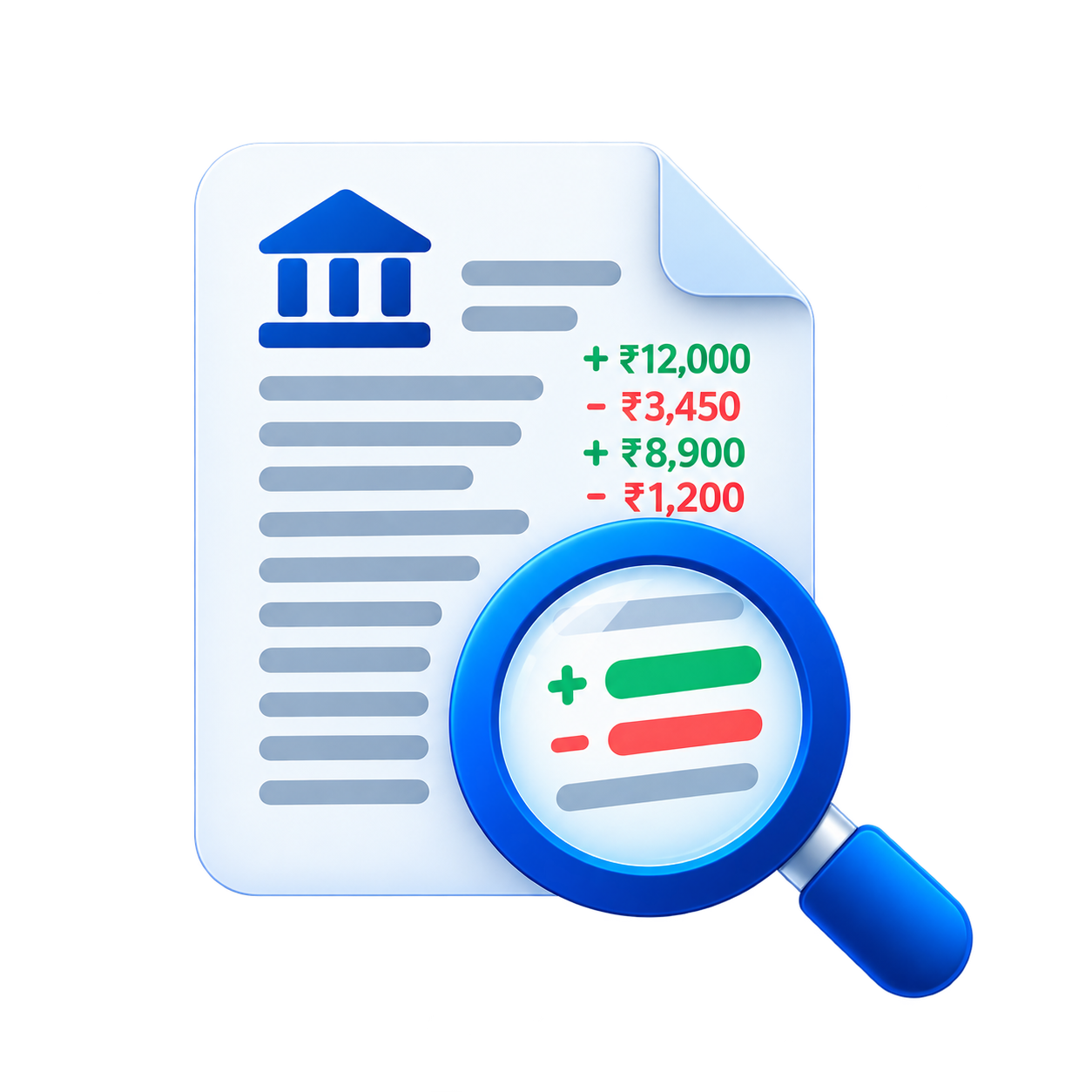
Forged statements cluster around applications where real numbers fall short: tenancies, loans, and visas. Most fakes are edited real PDFs — a balance changed here, a deposit inserted there — which means detection is a search for internal inconsistency rather than a judgment about the applicant. These seven checks catch the majority without specialist tools.
First, recompute the running balance row by row from the opening figure; edited amounts break the chain exactly where they were altered. Second, inspect PDF metadata for editing software, modification dates earlier than creation dates, or stripped creator fields. Third, count fonts across pages — pasted text arrives in a different typeface. Fourth, test round-number clustering and out-of-order dates, both common in fabricated rows.
Fifth, compare declared income against payer patterns rather than totals; inserted salary lines rarely match the employer's real descriptor cadence. Sixth, look for missing pages via date gaps and sequence breaks in running balances. Seventh, verify the document against a second source — an employer callback, a tax transcript, or a fresh download the applicant pulls up on screen.
The free Bank Statement Analyser automates the first four checks on any upload: balance-chain validation with per-row deviations, metadata inspection, font-consistency signals, and anomaly flags, all rolled into a 0–100 fraud score where every trigger names its evidence. Run suspicious files through the live demo before signing, and keep the report with the application file as the audit trail.