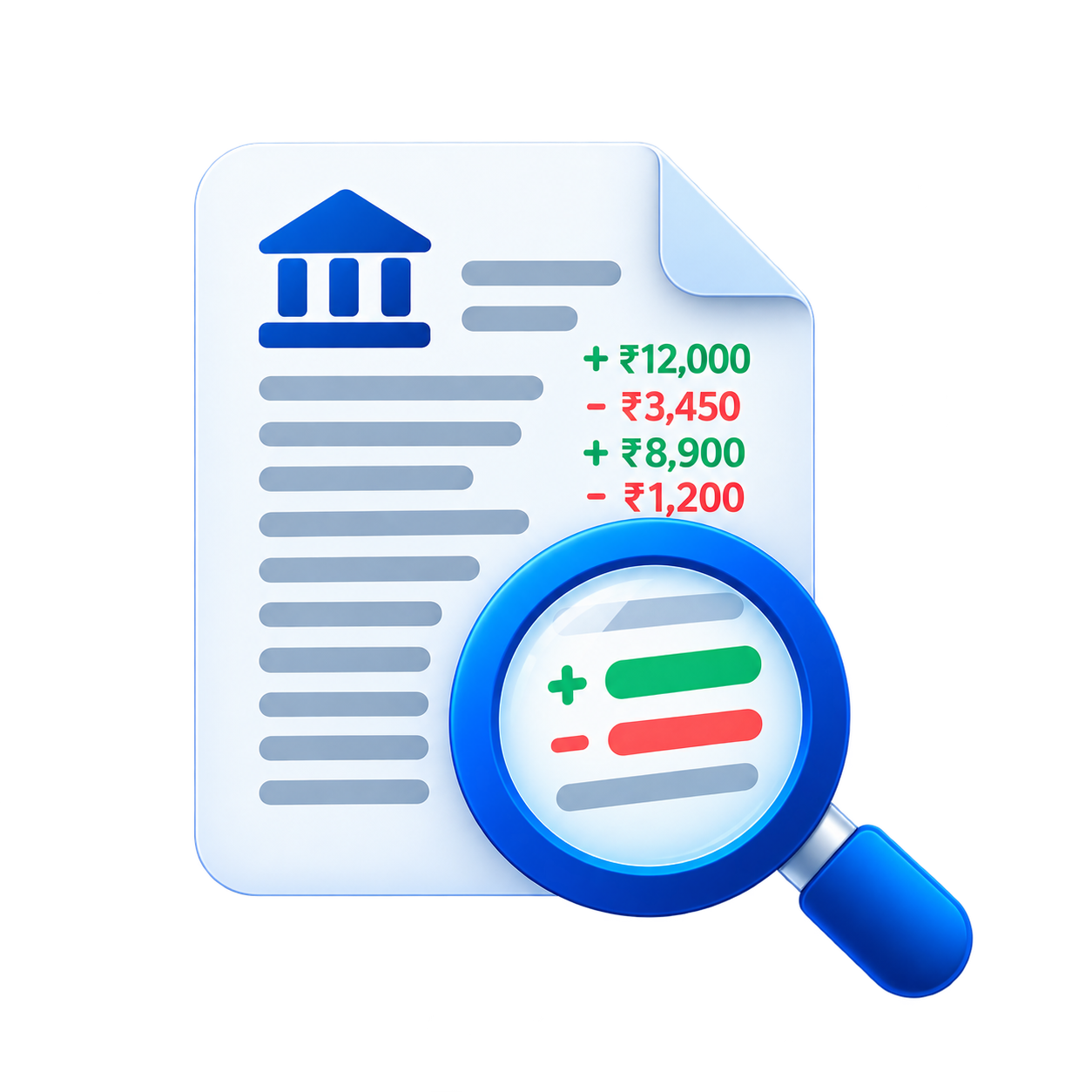
Chase statements follow a consistent table: Date, Description, Debit, Credit, and Balance, with checking, savings, and card activity in separate sections. A proper bank statement converter keeps those columns in their original order instead of remapping them, and splits multi-account PDFs into clean sheets so checking activity never mixes with savings. The free Bank Statement Converter detects Chase layouts automatically — upload the PDF exactly as downloaded from chase.com, scans included.
Reconciliation is what separates conversion from copying. Opening balance plus signed transactions must equal the closing balance within a small tolerance, and any mismatch should produce a clear error naming the problem rather than a spreadsheet with shifted rows. Every Chase file converted here passes that check before the download appears, with a Statement Info sheet recording bank, period, and balances for audit.
The output is a clean .xlsx with a Transactions sheet plus Statement Info, and a matching CSV for QuickBooks, Google Sheets, or custom imports. Password-protected Chase PDFs unlock in memory only — the password is never stored — and files are deleted automatically after 24 hours.
When the spreadsheet raises bigger questions — irregular income, heavy EMI load, or a balance that needs explaining — run the same file through the free Bank Statement Analyser for income estimates, obligation breakdowns, and a 0–100 fraud score on the identical transactions.